
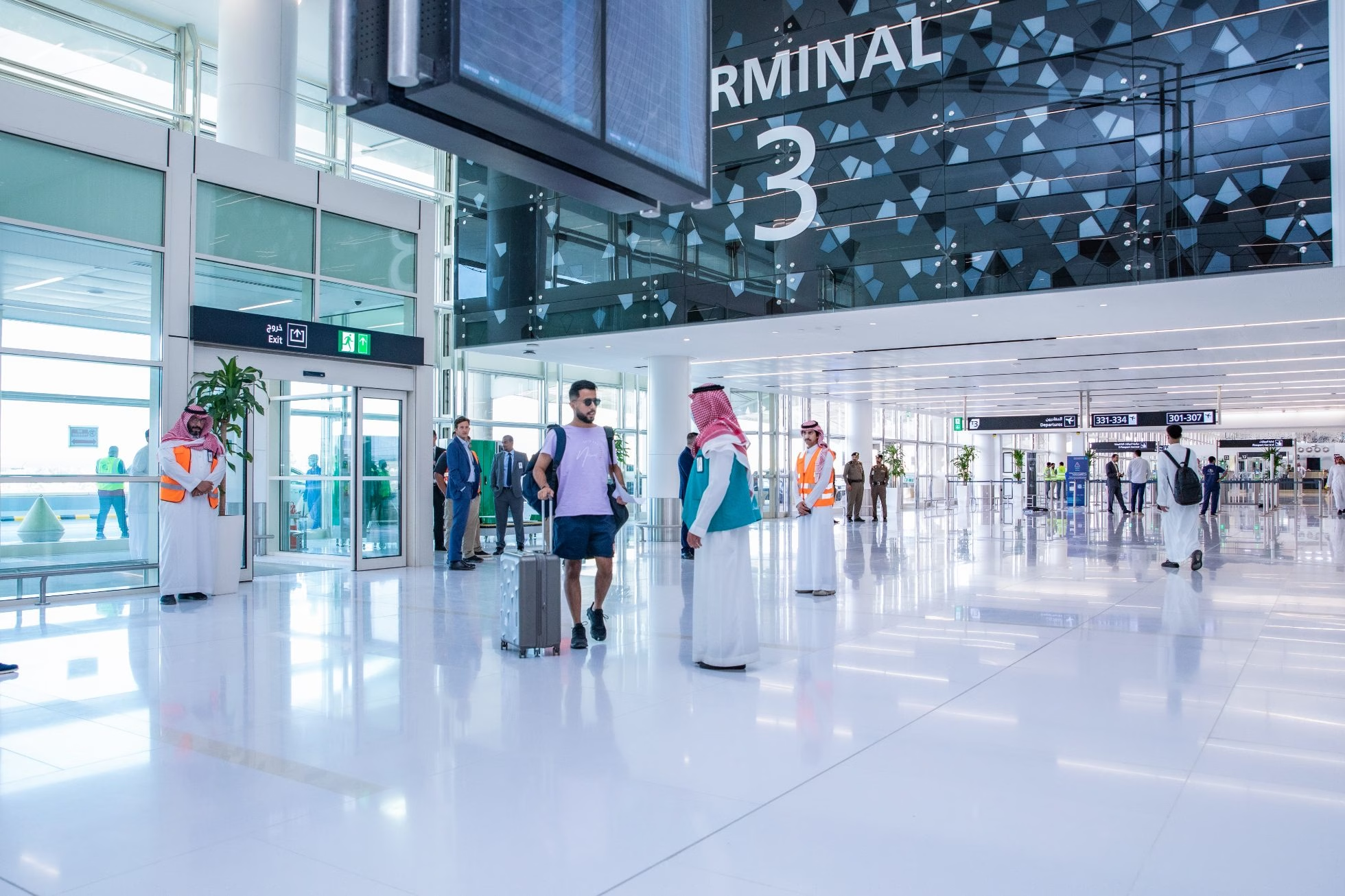
Ongoing security threats targeting King Khalid International Airport in Riyadh have created significant operational volatility across the Middle East. With over 3,000 departures cancelled in a single week, major carriers including Emirates, Etihad, and flydubai are navigating a challenging environment that continues to reshape regional transit patterns.
The recent attacks, which have resulted in casualties and infrastructure damage, have forced a reassessment of civil aviation security. Industry experts note that while established protocols exist for conventional threats, the prevalence of drone-based risks remains difficult to manage. This shift has prompted airlines to reconsider their risk exposure in the region, with some carriers opting to suspend service entirely until stability returns.
Economic and Operational Implications
The disruption extends beyond immediate flight cancellations. Delta Air Lines has postponed its planned nonstop service from Atlanta to Riyadh until next March, following an FAA warning regarding safety risks in Saudi airspace. These closures force airlines to adopt longer, more fuel-intensive flight paths to bypass restricted zones, further straining operational efficiency. As the region navigates this period of uncertainty, stakeholders are closely monitoring how these systemic security challenges impact long-term growth and connectivity for the Middle East aviation sector.