
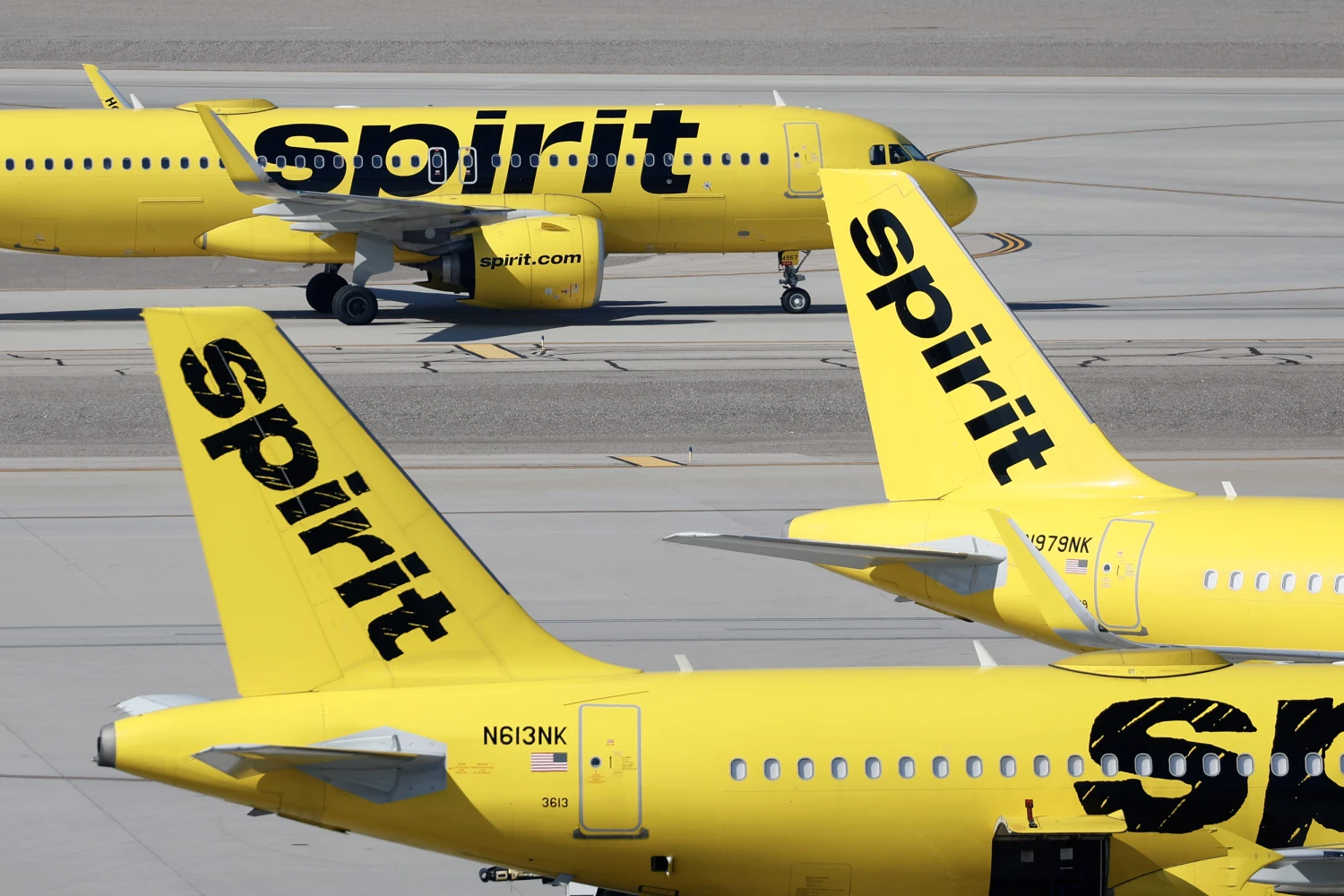
Spirit Airlines shutdown marks the end of one of the most recognizable low-cost airline models in the United States. On May 2, 2026, Spirit said it had started an orderly wind-down of operations, canceled all flights, and told customers not to go to the airport. The company also said customer service was no longer available. The shutdown followed years of financial pressure, two Chapter 11 filings, rising operating costs, failed rescue efforts, and a restructuring plan that could not keep the airline flying.
For more than three decades, Spirit sold one of the clearest propositions in U.S. aviation: a low base fare, with nearly everything else priced separately. The model made the airline a target of customer frustration, media criticism, and industry debate. It also made Spirit one of the most influential carriers in modern U.S. air travel.
Here are the last ATC communications between the final Spirit Airlines flight to land, flight NK1833, and Dallas/Fort Worth Airport (KDFW) Tower. pic.twitter.com/yqQhU07zz2
— Turbine Traveller (@Turbinetraveler) May 2, 2026
Spirit Airlines Shutdown Marks the End of the Bare-Fare Model
Spirit was never designed to compete on elegance. It was designed to compete on price. The airline’s central promise was simple: customers could pay less for the seat, then choose whether they wanted to pay for extras such as bags, seat assignments, refreshments, and other services.
That model made Spirit one of the most recognizable ultra-low-cost carriers in the United States. It also made the airline one of the most criticized. Passengers often complained about fees, seat comfort, customer service, and the feeling that every part of the travel experience had been separated into a chargeable item.
However, Spirit’s influence cannot be measured only by customer complaints. The airline helped change how Americans bought airline tickets. It trained travelers to look closely at the base fare, compare add-on costs, and make tradeoffs between price and comfort. It also forced larger airlines to respond with their own lower-tier fare products.
The Spirit Airlines shutdown is therefore more than the failure of one carrier. It is the end of a company that helped reshape the lower end of the U.S. airline market.
From Charter One to Spirit Airlines
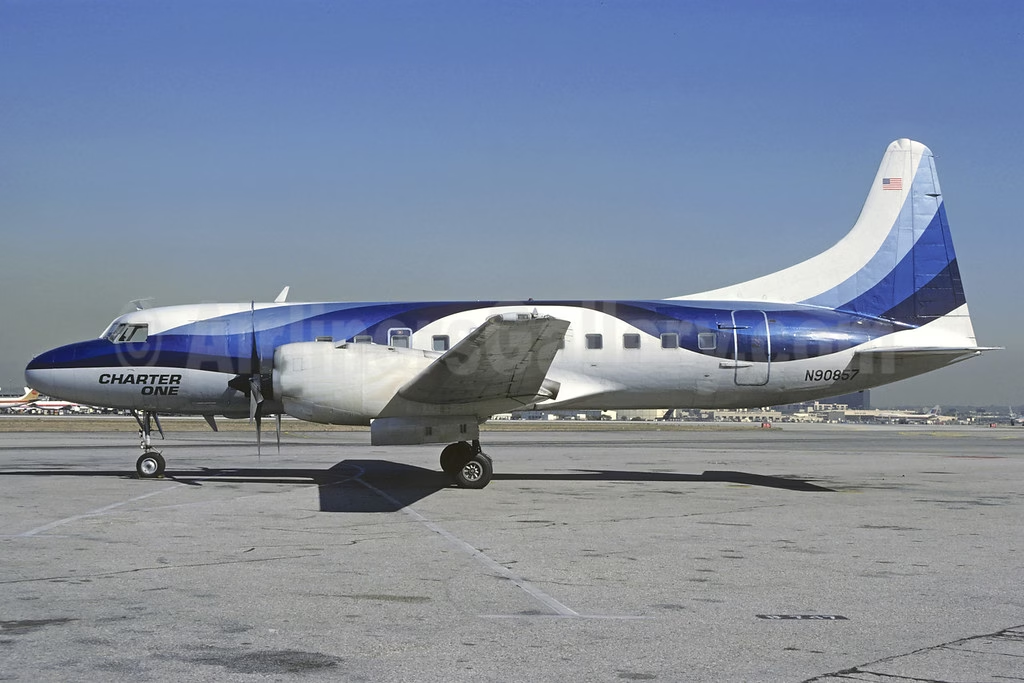
Spirit’s origins were far removed from the image of a major national airline. The company traces its corporate roots to Clippert Trucking Company, a Michigan corporation founded in 1964. By the early 1980s, Ned Homfeld was involved with Charter One, a Detroit-area charter travel business that served leisure customers and gamblers traveling to destinations such as Atlantic City. Spirit’s own filings state that the company began air charter operations in 1990 and renamed itself Spirit Airlines in 1992.
That early history matters because Spirit’s later identity was not accidental. The company was built around transportation first. It was not trying to compete with legacy airlines on premium service, global connectivity, airport lounges, or business-class comfort. Its advantage was price.
As Spirit expanded, that price-first approach became the foundation of its brand. The airline grew into a major ultra-low-cost carrier with an all-Airbus narrowbody fleet, leisure-heavy routes, and a reputation for aggressive fare pricing. Its bright yellow aircraft became easy to recognize, but the more important distinction was its business model.
How Spirit’s Bare-Fare Model Worked
Spirit’s business model was based on unbundling. Instead of including bags, seat assignments, refreshments, and other services in the ticket price, the airline separated the base fare from optional extras. Spirit described this as its “Bare Fares” model, built around unbundled base fares and customer choice over optional services.
The logic was straightforward. A passenger traveling with only a personal item could pay less. A passenger who wanted a checked bag, assigned seat, or onboard purchase paid more. For Spirit, this created a lower advertised fare and more opportunities to generate non-ticket revenue.
The model was controversial because many customers disliked the feeling of being charged for each part of the travel experience. However, it also reflected how many passengers actually bought airline tickets. Price-sensitive travelers often searched by fare first, especially on leisure routes. Spirit built its strategy around that behavior.
Former CEO Ben Baldanza explained the airline’s position clearly in 2013. He compared Spirit to McDonald’s, saying customers did not go there expecting filet mignon. His point was that Spirit was not pretending to sell a premium product. It was selling a lower total price, with a more limited service experience.
A Brand Built Around Price
Spirit’s marketing often matched the directness of its product. The airline became known for provocative advertising, unusual promotions, and a willingness to use controversy for attention. That approach was not typical for the airline industry, where carriers usually protect their brands with more conservative messaging.
For Spirit, attention was useful. The airline did not need to be admired in the same way as Delta, United, American, or Lufthansa. It needed travelers to know that its fares were low. In many markets, that was enough to make customers consider the airline, even if they did not like the broader experience.
This created a difficult brand position. Spirit was memorable, but often for the wrong reasons. It was known as cheap, but also uncomfortable. It was visible, but not always trusted. That worked when the airline could keep fares low enough to overcome customer resistance. It became more difficult when costs increased and competitors adapted.
Never forget what Senator Elizabeth Warren took from us!
— Breanna Morello (@BreannaMorello) May 2, 2026
R.I.P Spirit Airlines. pic.twitter.com/wxZM7Lssfk
How Spirit Changed U.S. Airlines
Spirit’s influence reached beyond its own passengers. The airline helped normalize unbundled pricing across the U.S. airline market. Larger carriers did not copy Spirit completely, but they adopted parts of the model through basic economy fares, tighter fare segmentation, baggage fees, paid seat assignments, and stripped-down entry pricing.
That may be Spirit’s most important legacy. The airline forced larger competitors to defend the lowest end of the fare market while still protecting higher-yield customers through premium cabins, loyalty programs, corporate contracts, and larger networks.
Spirit competed from the bottom of the market upward. The major airlines responded by creating lower-tier products that allowed them to compete on price without giving up the rest of their business model.
In that sense, Spirit won part of the strategic argument. The company itself failed, but many of the ideas that made it controversial became common across the industry.
Why the Spirit Airlines Shutdown Happened
The Spirit Airlines shutdown was not caused by one issue. The airline had been under pressure for years. It struggled after the pandemic, recorded significant losses, carried heavy debt, and faced rising costs. By the time Spirit filed for Chapter 11 protection in November 2024, the company had lost more than $2.5 billion since the start of 2020. Spirit then sought bankruptcy protection again in August 2025, reporting $8.1 billion in debt and $8.6 billion in assets, according to court filings.
The blocked JetBlue merger also removed a possible path out of financial pressure. Spirit was left to continue independently at a time when its cost structure and competitive position were becoming more difficult. Larger airlines had already adopted basic economy products, which reduced some of Spirit’s pricing advantage.
The ultra-low-cost model depends on scale, high aircraft utilization, low unit costs, and steady demand from price-sensitive travelers. When those conditions weaken, the model becomes less forgiving. A full-service airline has more ways to generate revenue, including premium cabins, loyalty programs, cargo, corporate travel, and international partnerships. Spirit had fewer buffers.
Fuel prices added another major challenge. Spirit’s restructuring plan assumed much lower jet fuel costs than the market was showing by late April 2026. That cost pressure made it harder for the airline to survive without additional financing.
The Fleet Question After the Spirit Airlines Shutdown
The Spirit Airlines shutdown also raises a practical aviation market question: what happens to the aircraft?
Spirit operated an all-Airbus A320-family fleet. As of June 30, 2025, the company reported 215 A320-family aircraft. That fleet included aircraft financed through operating leases, owned aircraft, and aircraft tied to failed sale-leaseback transactions that were treated as finance obligations.
The aircraft still hold value, even if the airline no longer does. Some aircraft may return to lessors. Others may move through creditor processes, restructuring claims, secondary-market transactions, or eventual placement with other operators. For lessors, maintenance providers, parts suppliers, and airlines looking for narrowbody capacity, Spirit’s shutdown could create movement across the Airbus A320-family market.
Spirit had already been shrinking before the final shutdown. In March 2026, the airline planned to reduce its fleet to roughly 76 to 80 aircraft by the third quarter of 2026, primarily consisting of Airbus A320 and A321ceo aircraft.
Airline shutdowns can also create secondary-market opportunities for aircraft leasing, remarketing, part-out activity, and, in some cases, passenger-to-freighter conversions. For PlanePost readers, the important point is that an airline’s closure does not mean the end of its assets. Aircraft, engines, parts, leases, airport slots, and maintenance obligations can all move into new commercial channels.
What Spirit Leaves Behind
The Spirit Airlines shutdown does not erase the carrier’s influence on modern airline pricing. Spirit proved that many travelers would accept a reduced service experience in exchange for a lower fare. It also showed that unbundling could change customer behavior, competitor pricing, and the structure of the U.S. airline market.
At the same time, Spirit’s shutdown shows the limits of the bare-fare model. A low fare can attract customers, but it does not protect an airline from debt, rising fuel costs, aircraft groundings, weak demand, or larger competitors that can match entry-level pricing while earning revenue from premium products.
Spirit was not simply a cheap airline. It was a serious commercial experiment in how far an airline could strip down the passenger product and still grow. For years, the answer was very far. In the end, not far enough.