
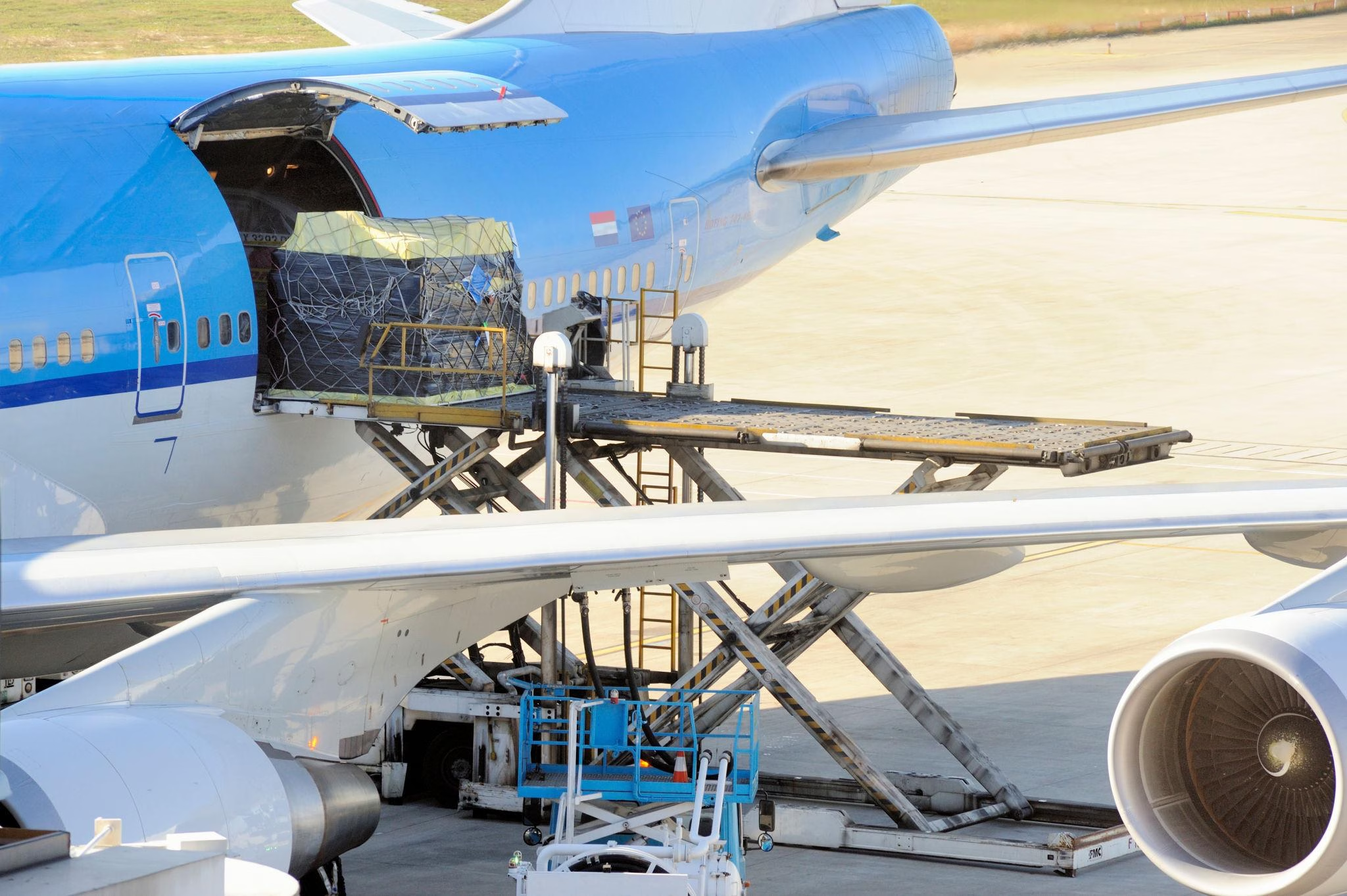
Passenger to freighter conversions are becoming a larger part of the air cargo market as airlines, lessors, and cargo operators look for more flexible ways to use existing aircraft.
Global trade depends on constant movement. Aircraft, ships, trucks, trains, warehouses, and logistics networks all work together to move goods across borders and between markets. When that system runs smoothly, most people rarely think about it. When it slows down, the importance of transportation becomes obvious very quickly.
The COVID-19 pandemic exposed that reality on a global scale. Passenger travel collapsed, airlines parked aircraft, and supply chains came under pressure. At the same time, demand remained strong for medical supplies, electronics, aircraft parts, industrial components, and e-commerce shipments.
That created a new level of attention around air cargo. Ocean freight still handles most global trade by volume, but air cargo plays a different role. It moves goods where time, value, and urgency matter most. Pharmaceuticals, aircraft parts, electronics, emergency supplies, and high-value industrial components often depend on speed rather than the lowest possible shipping cost.
This is one reason passenger to freighter conversions, often called P2F conversions, have become more important. These programs modify former passenger aircraft for cargo operations, giving aircraft a second life while adding capacity to the global freight market.
Air Cargo Is Becoming a Strategic Market
Air cargo does not move everything, and it does not need to. Ships will continue to carry most global goods because ocean freight works best for heavy, lower-urgency cargo.
Air freight serves a different purpose. It supports industries where delay can become expensive. A grounded aircraft waiting for a part, a manufacturer waiting for a critical component, or a medical supplier moving urgent inventory may not have time to wait for ocean shipping.
That makes air cargo an important part of supply chain resilience. Recent disruptions, port congestion, regional conflicts, and the growth of e-commerce have all increased demand for fast and flexible logistics options.
Passenger to freighter conversions support this market by adding cargo capacity without relying only on new production freighters. For airlines, cargo operators, aircraft owners, and lessors, these conversions create a useful path for aircraft that may no longer fit passenger demand but still have operational value.
What a P2F Conversion Actually Involves
During the pandemic, some airlines used passenger aircraft for temporary cargo missions. They carried freight in the belly, and in some cases, removed seats so lighter cargo could travel inside the cabin. These short-term measures helped, but they did not turn aircraft into dedicated freighters.
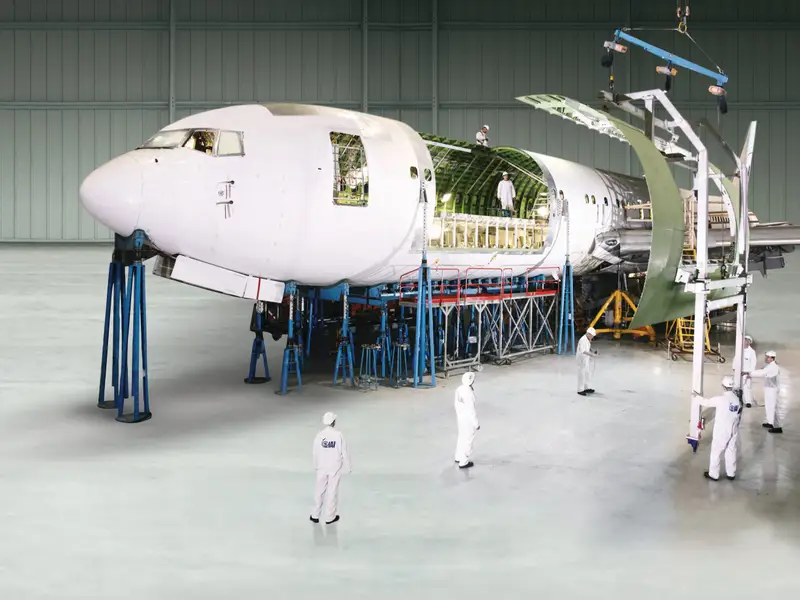
A true passenger to freighter conversion requires more work. Depending on the aircraft and conversion program, engineers may add cargo restraint systems, smoke detection, fire protection, floor reinforcement, loading systems, structural changes, and certification updates.
Traditional full-freighter conversions often include a large main deck cargo door. This allows crews to load pallets and containers directly onto the main deck. For aircraft that will remain in cargo service long term, this type of conversion can create a highly capable freighter.
The tradeoff is commitment. A full conversion requires time, capital, and a long-term cargo strategy. Once an aircraft enters dedicated freighter service, returning it to passenger use becomes much more difficult.
Why Flexibility Matters
Aircraft are long-life assets. Their value depends not only on what they can do today, but also on what they can become later.
For some aircraft, a full freighter conversion makes sense. If an aircraft has reached the later stage of its passenger service life, a dedicated cargo role may offer the best way to extend its value.
Other aircraft, especially widebodies with remaining useful life, may benefit from a less invasive path. Owners may want to use the aircraft for cargo while still preserving future flexibility if market conditions change.
That is where reversible and lower-disruption conversion concepts have gained attention. These solutions do not replace every full freighter conversion. Instead, they give operators another option between temporary cargo use and a permanent structural conversion.
Avensis MEDIUS and the Reversible Conversion Model
Avensis Aviation’s MEDIUS concept is one example of this trend. Avensis developed MEDIUS as a reversible passenger to freighter conversion for widebody aircraft such as the Airbus A330 and A340.
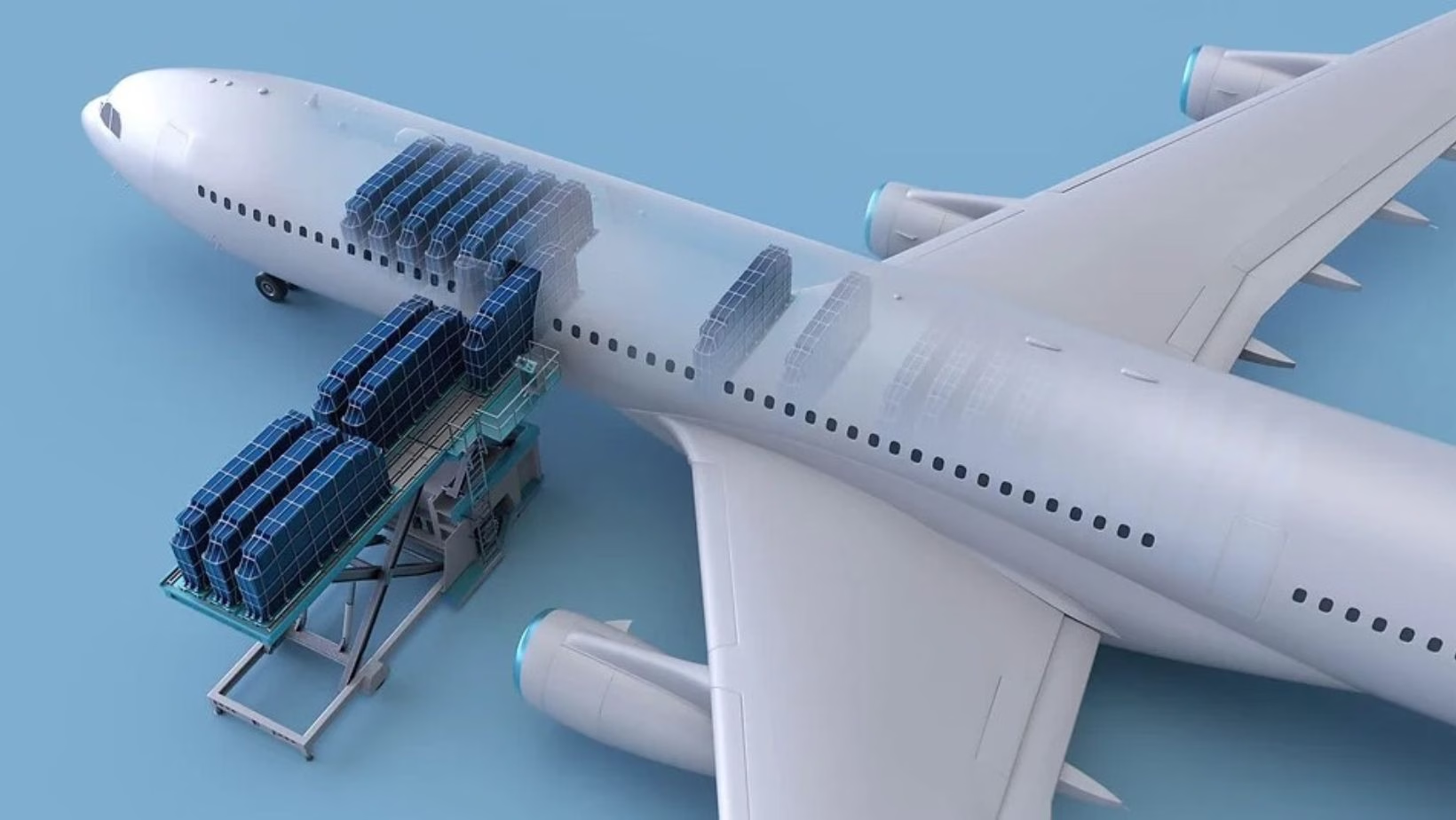
Instead of cutting a traditional main deck cargo door, the system uses the aircraft’s existing passenger doors and converts the cabin into a Class E cargo compartment. The main appeal is flexibility. Operators can use the aircraft for cargo while preserving more of its future passenger-service potential.
For lessors and aircraft owners, that balance matters. A cargo conversion can generate revenue, but aircraft residual value remains important. A reversible approach can help owners serve cargo demand without giving up as much future flexibility.
This does not mean reversible conversions fit every operator. Dedicated freighters with main deck cargo doors will remain essential for many cargo networks. However, for certain aircraft, missions, and ownership strategies, a reversible solution can offer a practical alternative.
Loading Efficiency Shapes the Business Case
Cargo operators judge aircraft by more than payload. Ground time matters as well.
A converted aircraft that takes too long to load or unload may lose some of its economic advantage, especially in express freight and e-commerce operations. In those markets, turnaround time affects aircraft utilization.
That is why loading systems have become a larger part of the conversion discussion. Avensis positions MEDIUS EVO around improved loading efficiency for e-commerce and express cargo operations. The goal is not only to carry freight, but to move it through the aircraft faster and with less operational friction.
Faster loading can improve aircraft utilization. Better utilization can also improve the economics of the converted platform. For cargo operators, those details matter.
A Market Larger Than One Conversion Program
The passenger to freighter market extends across several aircraft types, conversion providers, and MRO companies. It includes both narrowbody and widebody aircraft, each serving different parts of the cargo market.
Widebody conversions play an important role in long-haul freight. Aircraft such as the Boeing 777 and Airbus A330 offer the range and volume needed for global cargo routes. In this segment, companies such as Aspire MRO have participated in Boeing 777 conversion work connected to Mammoth Freighters.
This makes P2F conversions more than a maintenance niche. The market sits at the intersection of aircraft leasing, fleet planning, cargo demand, aircraft residual value, and global logistics.
Boeing’s 2024 World Air Cargo Forecast projects the global freighter fleet will grow from 2,340 aircraft in 2023 to 3,900 aircraft by 2043. Boeing also expects converted passenger aircraft to represent roughly two-thirds of future freighter deliveries.
That outlook explains why conversion programs remain important. New production freighters will continue to serve the market, but converted aircraft should play a major role in future cargo capacity.
The Outlook for Passenger to Freighter Conversions
Passenger to freighter conversions are growing because several trends are moving in the same direction. E-commerce continues to support demand for faster shipping. Supply chain disruptions have pushed companies to value resilience. Airlines and lessors want better ways to protect aircraft value.
Cargo operators also need capacity that fits their networks. P2F conversions help address that need by allowing aircraft to move from one market to another as demand changes. They can extend the useful life of existing fleets and give operators access to cargo capacity without relying only on new aircraft deliveries.
The strongest conversion programs will likely balance capability, cost, loading efficiency, and asset flexibility. Full freighter conversions will remain important for dedicated cargo operators. At the same time, reversible and lower-disruption solutions may become more attractive where owners want cargo capability without giving up future options.
The broader story is aircraft life-cycle value. Passenger to freighter conversions show how aviation assets can adapt as markets change.
Air cargo will remain essential for goods where time, value, and reliability matter. As global supply chains become more complex, the ability to move urgent goods quickly will remain valuable.
For aviation, that makes the P2F market one of the most important sectors to watch.
PlanePost can help owners, operators, and buyers evaluate aircraft with cargo potential. From sourcing suitable aircraft to reviewing market fit and connecting with qualified MRO or conversion partners, PlanePost supports the commercial side of passenger-to-freighter opportunities.