

In modern aviation, the SHELL model framework is essential for maintaining high safety standards. Safety is rarely about a single broken part. Instead, it concerns how people interact with complex systems. Consequently, the SHELL model concept has become the industry standard for understanding these interactions.
The International Civil Aviation Organization (ICAO) uses this model extensively. Furthermore, safety experts worldwide rely on it. Therefore, it is a cornerstone of any effective Safety Management System (SMS). It provides a structured way to analyze human factors. Additionally, it identifies where errors occur.
For more information on industry standards, see the ICAO Safety Management Manual.
What is the SHELL Model Framework?
The SHELL model framework is a conceptual tool. Experts use it to analyze the interaction between multiple system components. Originally, designers created it to visualize the relationship between the human operator and aviation resources.
The name is an acronym. It derives from four components:
- Software
- Hardware
- Environment
- Liveware
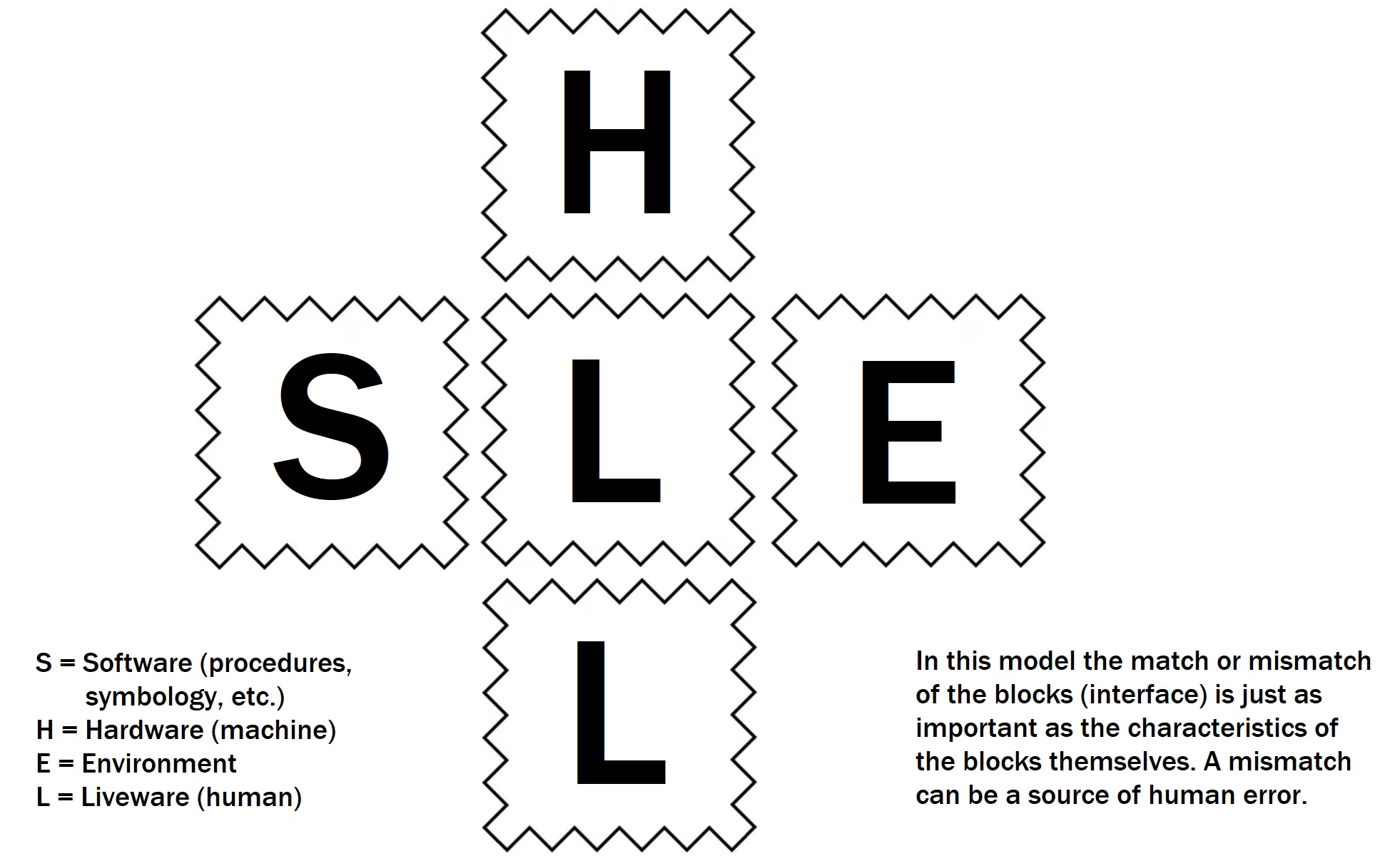
The Centerpiece: The Human Element in SHELL
The defining feature of this model is the placement of Liveware (the human) at the center. In the SHELL model of aviation, humans are the most critical component. However, they are also the most flexible. Unfortunately, they are also the most susceptible to error.
The edges of this central block are not straight. Rather, they are jagged. This represents the limitations in human performance. Therefore, other system components must match these jagged edges perfectly. If they do not fit, a “mismatch” occurs. Consequently, this mismatch often leads to an accident.
Breakdown of SHELL Model Aviation Components
To use the model effectively, you will need to understand each letter. This section summarizes each part.
S – Software This refers to non-physical resources. For example, it includes procedures, checklists, manuals, and regulations. A mismatch here might happen if a pilot misunderstands a poorly written checklist.
H – Hardware This represents the physical elements. Specifically, it includes the aircraft, tools, and work stations. If a seat is uncomfortable, that is a hardware issue. Likewise, hard-to-read warning lights are hardware problems.
E – Environment This covers the context of operations. It includes internal factors like cabin temperature. Moreover, it encompasses external factors like weather and terrain. It also covers the organizational culture.
L – Liveware This appears twice in the model. First, it is the central human operator. Second, it represents other people in the system. For instance, this includes flight crews and air traffic controllers.
The Four Critical Interfaces of SHELL Model
An aviation SMS uses the SHELL model structure to analyze specific interfaces. This analysis identifies risks.
- Liveware to Hardware (L-H): This interface looks at how humans and machines interact. It is the essence of ergonomics. Are the controls within reach? If a pilot confuses two switches, it is an L-H mismatch.
- Liveware to Software (L-S): This examines the relationship between the person and supporting systems. Are the manuals clear? “User unfriendly” documentation often leads to L-S errors.
- Liveware to Environment (L-E): This interface involves the human relationship with their surroundings. This ranges from physical issues, like a cold cockpit, to psychological issues like jet lag.
- Liveware to Liveware (L-L): This focuses on the interaction between people. It covers leadership and teamwork. Crew Resource Management (CRM) training specifically strengthens this interface.
Why SHELL Model Matters for SMS
The SHELL model approach moves the focus away from blaming individuals. Safety managers do not ask “Who made the mistake?” Instead, they ask “Which interface failed?”
Operators identify mismatches between the human and the system. Then, they redesign the system to support the human. They do not expect the human to be perfect. Finally, this proactive approach makes modern aviation safe. If you are looking to expand your fleet, remember to check PlanePost for aircraft purchases that meet your safety hardware requirements.