
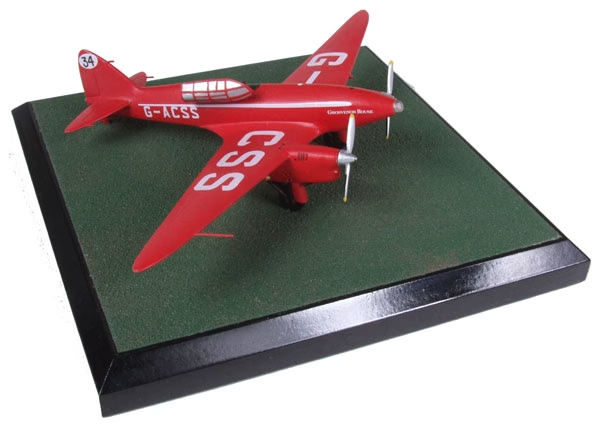
The aviation community is assessing the condition of G-ACSS, the world’s only airworthy de Havilland DH.88 Comet, following a nose-over incident during landing at the Shuttleworth Collection on August 15. Shuttleworth officials confirmed the pilot was extracted and has since been discharged from the hospital with minor injuries.
Images from the scene show visible structural damage to the aircraft, particularly the tail section and horizontal stabilizers. The incident occurred on the grass airfield following the Flying Proms display.
Technical Challenges of the DH.88
Operating the DH.88 Comet remains a significant challenge for modern pilots. Designed specifically for long-distance racing, the aircraft features a taildragger configuration and a high center of gravity. These characteristics make the machine susceptible to tipping forward during braking, a risk exacerbated by its long nose and specific cockpit placement.
As a specialized racing platform from the 1930s, the Comet was engineered for speed rather than ease of handling. With this airframe now likely sidelined for a lengthy restoration, operators and enthusiasts remain focused on the preservation of this piece of aviation history. The aircraft’s long-term future will depend on a detailed engineering survey of the damage sustained in the event.