
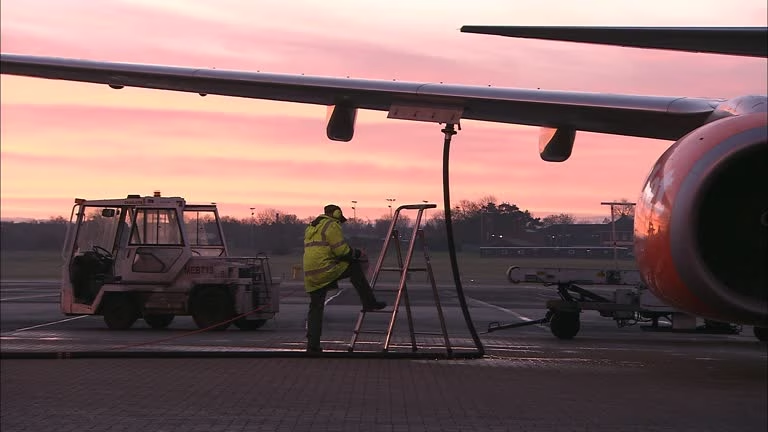
The global aviation sector is bracing for significant disruption as jet fuel prices continue to climb, driven by the ongoing conflict in the Persian Gulf. With the blockade of the Strait of Hormuz restricting crude oil flow to Asian refineries, the industry has seen fuel prices spike from approximately USD 85-90 per barrel to as high as USD 200 per barrel since February 2026.
For many carriers, fuel now accounts for nearly 30 percent of operating expenses. While larger legacy airlines are attempting to pass these costs to passengers through increased fares and baggage fees, budget carriers face a more precarious future. Analysts from the Eno Center for Transportation warn that continued supply shortages could force widespread capacity reductions or fleet groundings as the summer travel season approaches.
Regional impacts are varied. Asian airlines are reportedly entering emergency management phases, while European carriers have requested emergency intervention from the European Union to address supply scarcity. In the United States, carriers are grappling with higher input costs, though supply remains more stable than in other markets. As the industry faces these decoupling fuel prices, experts suggest that even a resolution in the Persian Gulf may not immediately restore historical price norms due to sustained constraints on global refining capacity.