
The Federal Aviation Administration has taken a significant step toward allowing civilian supersonic aircraft to operate over the continental United States. The agency recently released a rule proposal establishing new noise certification standards, aiming to replace the restrictive ban in place since 1973.
Under the proposed framework, aircraft manufacturers must ensure that sonic boom overpressure levels do not exceed 0.11 pounds per square foot. FAA officials suggest this threshold would reduce the signature of a sonic boom to a level comparable to a car door closing. This regulatory shift acknowledges decades of advancement in aeronautic engineering and noise mitigation.
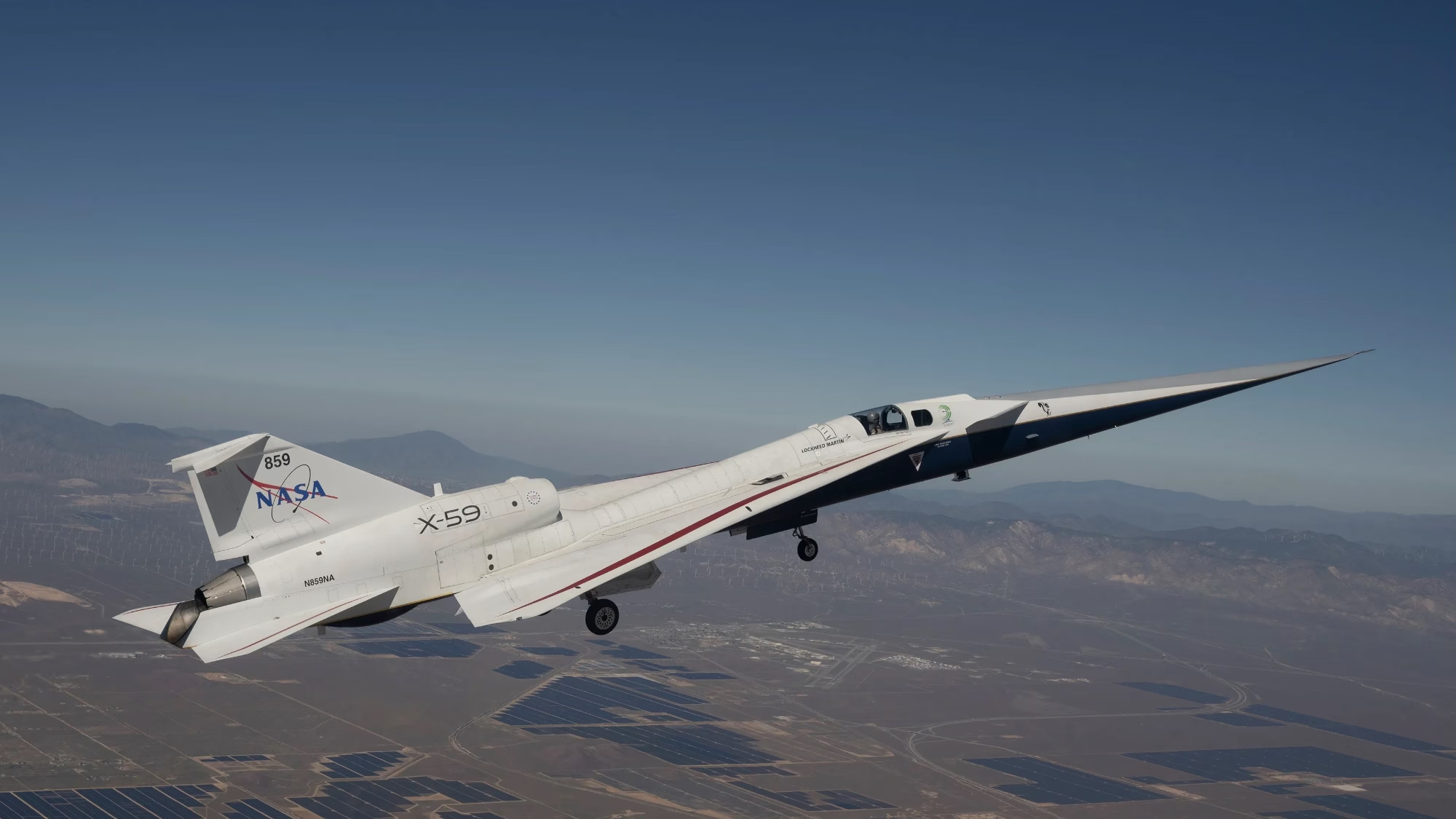
The move provides a clearer path for original equipment manufacturers and developers who have been testing low-boom technology. Projects such as NASA’s X-59 experimental aircraft have demonstrated the feasibility of reducing the traditional sonic boom to a quieter thud. Private developers are also actively pursuing commercial supersonic designs with these performance requirements in mind.
While the proposal specifically targets flight-phase noise, the FAA plans to introduce additional standards for takeoff and landing operations later this year. These developments mark a transition from blanket prohibitions to technical compliance, potentially reopening the domestic market for supersonic transport.