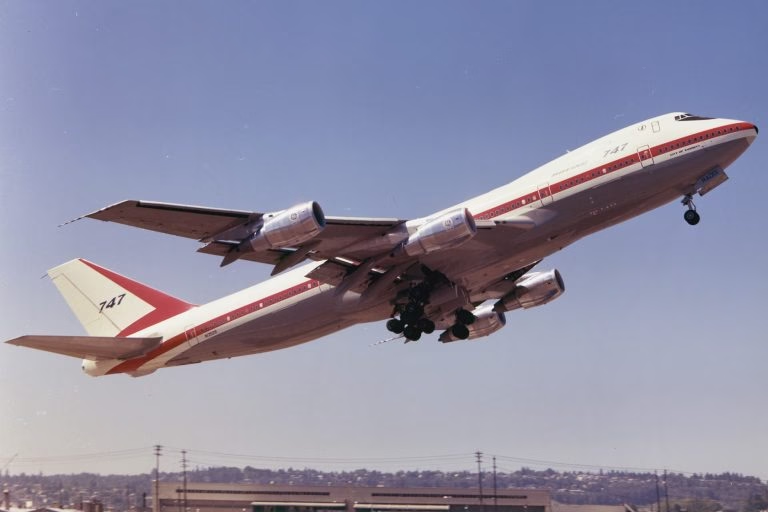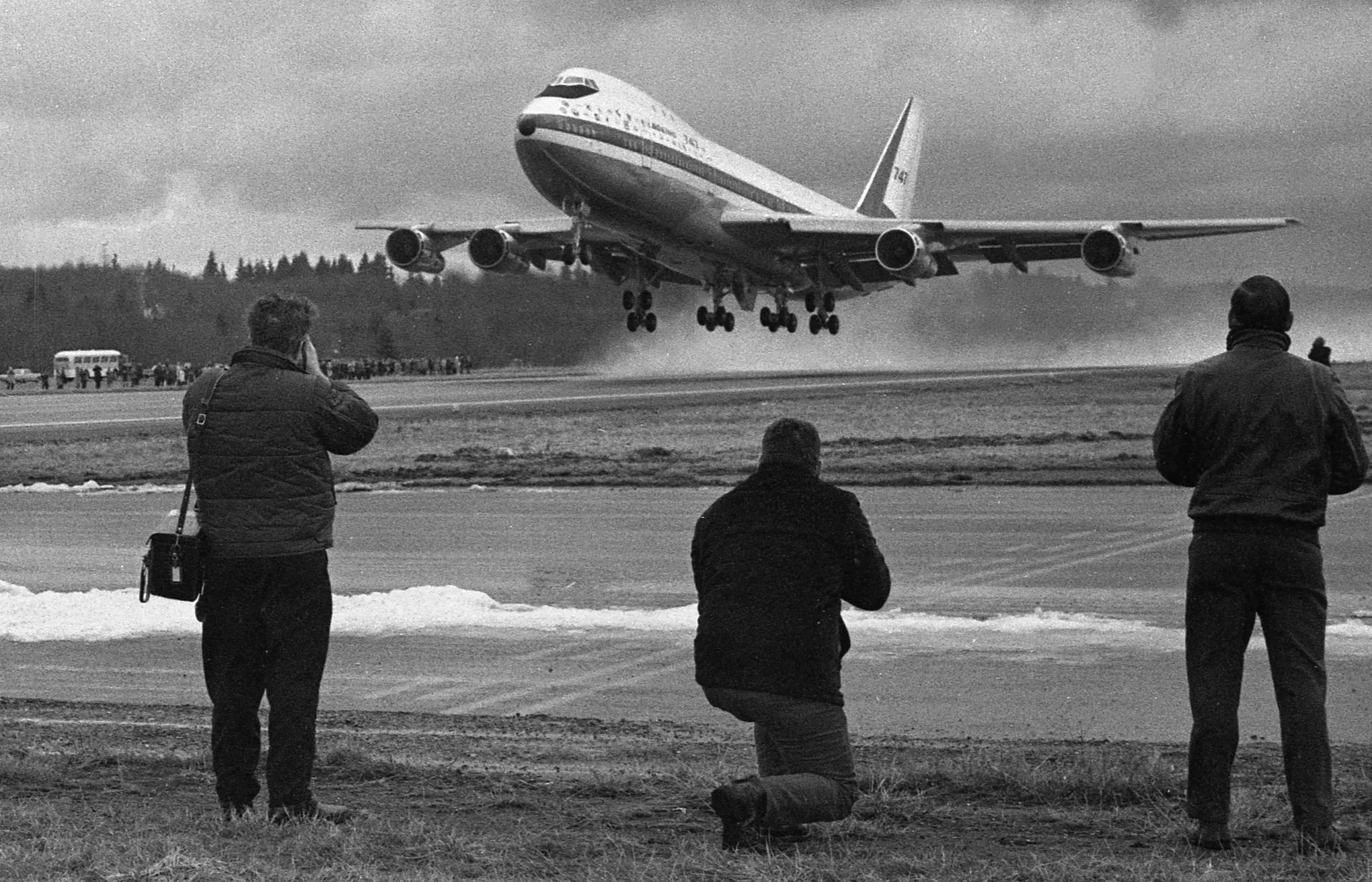
On this day, fifty-seven years ago, the future of air travel roared down a runway near Seattle and lifted into the grey Washington sky. On February 9, 1969, the Boeing 747 completed its maiden voyage. This event marked a pivotal moment in engineering history and launched the era of mass tourism. The aircraft, affectionately known as the “Jumbo Jet” and “Queen of the Skies,” changed how the world connected.
It is difficult to overstate the gamble Boeing took in the late 1960s. The company bet its entire financial future on an airplane that was two and a half times bigger than any existing jetliner. Critics worried the massive aircraft would be too heavy to fly or too unwieldy to land.
Boeing silenced those critics on that cool February afternoon at Paine Field in Everett. The prototype, a 747-100 model named the “City of Everett,” performed flawlessly.
On 9 February 1969, the Boeing 747 flew for the first time. A behemoth with four engines, and an ambition that bordered on arrogance. Many doubted it would even fly. Some doubted it should exist at all.
— Scott Bateman MBE (@scottiebateman) February 9, 2026
But it did. And it changed everything.
The @BoeingAirplanes 747 shrank the… pic.twitter.com/Ml2tXvx5uV
The Birth of a Giant
The story of the Boeing 747 first flight actually begins with a demand for more seats. Airline executives, particularly Juan Trippe of Pan Am, asked Boeing to design a plane that could handle surging passenger demand. They wanted an aircraft that would lower the cost per seat, opening international travel to the middle class for the first time.
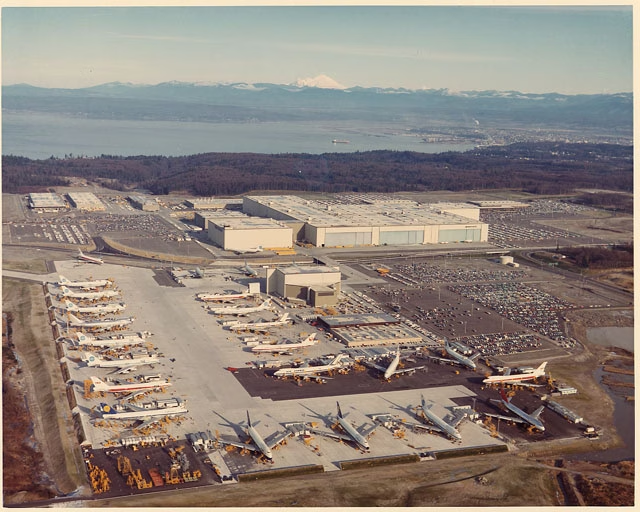
To build this behemoth, Boeing first had to construct the world’s largest building by volume in Everett, Washington. The design team, led by legendary engineer Joe Sutter, worked at a breakneck pace. They went from initial design concepts to a finished flying prototype in roughly 16 months. This incredible feat of engineering is still studied today.
The resulting design featured the iconic hump near the nose. This cockpit placement allowed the nose to swing open for cargo loading, ensuring the plane would have a secondary life as a freighter even if supersonic travel made passenger jets obsolete.
A “Pilot’s Dream”
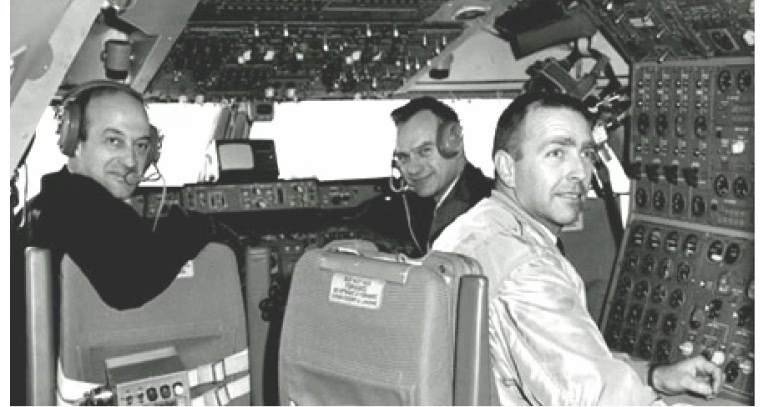
The maiden flight was commanded by chief test pilot Jack Waddell, with Brien Wygle as co-pilot and Jess Wallick as flight engineer. The flight lasted one hour and 15 minutes.
Despite its sheer size, the crew reported that the airplane handled beautifully. Waddell famously described the giant 747 as a “pilot’s dream” and a “two-finger airplane,” meaning it was responsive enough to be flown with just a thumb and forefinger on the control yoke.
A Lasting Legacy
Following that successful first flight, the 747 entered commercial service with Pan Am in January 1970. It immediately revolutionized the industry. The lower operating costs allowed airlines to offer cheaper tickets, making long-haul vacations to Europe or Asia a reality for millions of people who had never flown before.
Boeing continued to improve the design over the decades. The company produced 1,574 Jumbos over a remarkable 54-year production run, which officially ended in January 2023 with the delivery of the final 747-8 freighter.
While newer twin-engine jets have largely replaced it in passenger service, the legacy of that Boeing 747 first flight remains. It was the day the world truly began to shrink.